manual dometic rv thermostat wiring diagram
Dometic RV Thermostat Wiring Diagram: A Comprehensive Guide
This manual begins your journey with your new Dometic RV thermostat, guiding successful operation and enjoyment. It streamlines workflow and boosts productivity, ensuring smooth operation and longevity.
Understanding Dometic RV Thermostats

Dometic RV thermostats are central to maintaining a comfortable environment within your recreational vehicle, regulating both heating and cooling systems. These systems range from basic manual controls to sophisticated digital interfaces, each designed to optimize temperature and energy efficiency. Understanding the core functions of your specific Dometic thermostat is crucial for effective operation and troubleshooting.
The functionality extends beyond simple temperature adjustment; modern Dometic thermostats often incorporate features like programmable schedules, multiple zone control, and remote access via smartphone applications. These advanced capabilities allow for personalized comfort settings and convenient monitoring of your RV’s climate, even when you’re away.
A manual Dometic RV thermostat wiring diagram is your key to unlocking the full potential of these systems. It provides a visual roadmap of the electrical connections, enabling you to diagnose issues, perform repairs, and even customize your setup. Familiarizing yourself with the thermostat’s components and their interactions will empower you to maintain a consistently pleasant travel experience. Proper understanding ensures efficient operation and longevity of your RV’s climate control.
Types of Dometic RV Thermostats
Dometic offers a diverse range of RV thermostats, catering to various needs and budgets. Traditionally, analog thermostats provided basic manual control, relying on mechanical adjustments for temperature regulation. These are simpler to wire, often requiring fewer connections, and are frequently found in older RV models. A manual Dometic RV thermostat wiring diagram for these units is relatively straightforward.
However, the trend has shifted towards digital thermostats, offering enhanced features like programmable schedules, precise temperature control, and diagnostic capabilities. These thermostats utilize electronic sensors and microprocessors for improved performance. More advanced Comfort Control Systems integrate multiple sensors and control zones for optimal climate management.
Furthermore, Dometic provides thermostats compatible with heat pumps, allowing for efficient heating and cooling. Understanding the specific type of thermostat installed in your RV is paramount before attempting any wiring or troubleshooting. Each type necessitates a unique wiring approach, and consulting the correct manual Dometic RV thermostat wiring diagram is essential for safe and effective operation. Choosing the right type enhances your RV experience.
Wiring Diagram Basics: Color Codes
Understanding color codes is fundamental when working with a manual Dometic RV thermostat wiring diagram. While variations exist between models, certain colors are commonly used to denote specific functions. Typically, red wires indicate power supply – often 12V DC – and should be handled with extreme caution. White wires frequently serve as neutral or common connections, completing the electrical circuit.
Yellow wires often control the cooling function, activating the air conditioner compressor. Conversely, blue wires are generally associated with heating, triggering the furnace. Green wires may represent fan control, regulating airflow within the RV. However, these are generalizations, and always verify the specific color coding for your model using the official wiring diagram.
Incorrect wiring based on assumed color codes can lead to system malfunction or even electrical hazards. A manual Dometic RV thermostat wiring diagram will clearly illustrate the correct connections. Always double-check the diagram before making any connections, and if unsure, consult a qualified RV technician. Proper identification prevents damage and ensures safe operation.
Identifying Thermostat Terminals
Accurate identification of thermostat terminals is crucial when referencing a manual Dometic RV thermostat wiring diagram. Terminals are the connection points on both the thermostat and the controlled appliances (furnace, air conditioner, heat pump). Common terminal designations include ‘R’ or ‘Rh’ for power, ‘C’ for common, ‘Y’ for cooling, ‘G’ for fan, ‘W’ for heating, and ‘H’ for heat pump auxiliary heat.
The manual will provide a detailed terminal layout specific to your Dometic model. Terminals are often labeled directly on the thermostat’s backplate or within the wiring compartment. Some thermostats utilize screw terminals, requiring wires to be securely fastened, while others employ push-in connectors for easier installation.
Misidentifying terminals can result in incorrect wiring and system failure. Before connecting any wires, carefully compare the terminal markings on your thermostat with the corresponding labels on the wiring diagram. If the markings are unclear or missing, consult the Dometic documentation or a qualified technician. Precise identification ensures proper functionality and prevents potential damage.
Power Supply Wiring (12V DC)
Dometic RV thermostats typically operate on a 12V DC power supply, sourced directly from the RV’s electrical system. The manual Dometic RV thermostat wiring diagram will clearly indicate the positive (+) and negative (-) terminals for power connection; Usually, the positive wire connects to the ‘R’ or ‘Rh’ terminal, while the negative wire connects to the ‘C’ (common) terminal.

Proper polarity is essential; reversing the connections can damage the thermostat. Always verify the voltage with a multimeter before connecting the wires. A fused connection is highly recommended to protect the thermostat from power surges or short circuits. The fuse should be appropriately sized according to the thermostat’s specifications, as detailed in the manual.
Ensure the wiring is secure and properly insulated to prevent accidental shorts. Use appropriately sized wire gauge for the RV’s electrical system. Incorrect power supply wiring can lead to thermostat malfunction or complete failure. Refer to the diagram and the RV’s electrical schematics for accurate connections.
Furnace Wiring Connections
Connecting the Dometic RV thermostat to the furnace requires careful attention to the wiring diagram. The manual Dometic RV thermostat wiring diagram will show specific terminals for furnace control, typically labeled ‘W’ or ‘W1’ for heat activation. This terminal receives a signal from the thermostat to initiate the furnace’s heating cycle.
A common wire, often labeled ‘C’, is crucial for providing power to the thermostat and completing the circuit to the furnace. The furnace’s control board requires a stable 12V DC signal from the thermostat. Ensure the wiring connections are secure and free from corrosion. Incorrect wiring can prevent the furnace from operating or cause intermittent heating issues.
Always disconnect the power supply before working with furnace wiring. The manual often details specific wire colors for furnace connections. Double-check the wiring against the diagram before restoring power. Proper furnace wiring ensures safe and efficient heating within the RV.
Air Conditioner Wiring Connections
The Dometic RV thermostat connects to the air conditioner using specific wiring configurations detailed in the manual Dometic RV thermostat wiring diagram. Typically, a ‘Y’ or ‘Y1’ terminal activates the air conditioner’s compressor. This terminal receives a signal from the thermostat when cooling is requested.

A ‘G’ terminal controls the air conditioner’s fan, allowing independent fan operation. The ‘C’ wire, providing common power, is essential for completing the circuit. Correctly identifying and connecting these wires is vital for proper air conditioner function. Always verify the voltage requirements of your specific air conditioner model.
Before making any connections, disconnect the power supply to prevent electrical shock. The manual will illustrate the correct wire colors for each function. Secure connections are crucial to avoid intermittent cooling or compressor failure. Proper wiring ensures efficient and reliable air conditioning within the RV, maintaining a comfortable environment.
Heat Pump Wiring Configurations
Dometic RV heat pump wiring differs slightly from standard air conditioner connections, as detailed in the manual Dometic RV thermostat wiring diagram. A key distinction is the ‘O’ or ‘B’ terminal, which energizes the heat pump’s reversing valve for heating mode. This terminal receives power from the thermostat when heat is selected.
The ‘Y’ terminal functions similarly to air conditioning, activating the compressor, but operates in reverse for heating. The ‘G’ terminal still controls the fan. Crucially, heat pumps require a ‘C’ wire for proper operation, providing the necessary common voltage. Incorrect wiring can lead to inefficient heating or complete system failure.
Refer to your specific model’s wiring diagram for accurate terminal identification and wire color codes. Always disconnect power before working with electrical connections. Secure connections are paramount for reliable performance. Understanding these configurations ensures optimal heating and cooling functionality within your RV, maximizing comfort and efficiency.
Multi-Zone System Wiring
Multi-zone Dometic RV systems, as illustrated in the manual Dometic RV thermostat wiring diagram, utilize multiple thermostats to control different areas of the RV independently. Each zone requires its own thermostat and dedicated wiring back to the central control unit or furnace/air conditioner.
Wiring complexity increases with each added zone. Typically, a common ‘C’ wire runs to all thermostats, providing a return path for power. Zone-specific wires, such as ‘Y’ for cooling and ‘H’ for heating, connect each thermostat to the corresponding unit. Proper labeling of wires is essential during installation to avoid confusion.
Advanced systems may incorporate a zone controller, allowing for programmed temperature schedules and automated zone control. Carefully follow the wiring diagram for your specific controller model. Incorrect wiring can cause zones to operate incorrectly or even damage the system. Thorough testing after installation is crucial to verify functionality.
Digital vs. Analog Thermostat Wiring
The manual Dometic RV thermostat wiring diagram reveals key differences between digital and analog thermostat wiring. Analog thermostats, older models, typically employ simpler wiring with fewer connections – often just power, heating, and cooling wires. These systems rely on mechanical switches to control the RV’s climate control units.
Digital thermostats, conversely, utilize more complex wiring schemes. They often include additional wires for features like fan control, programmable schedules, and communication with central control systems. Digital models frequently require a common ‘C’ wire for continuous power, which may not be present in older RV wiring.
Understanding these differences is crucial during replacement or upgrades. Converting from an analog to a digital thermostat may necessitate running new wiring, particularly the ‘C’ wire. Always consult the specific wiring diagram for your Dometic model to ensure correct connections and avoid damaging the system. Incorrect wiring can lead to malfunction or safety hazards.
Troubleshooting Common Wiring Issues
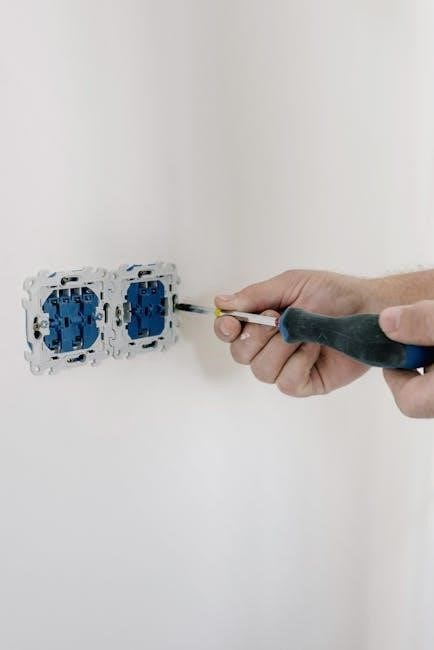
The manual Dometic RV thermostat wiring diagram aids in diagnosing frequent wiring problems. A common issue is a loose connection, causing intermittent heating or cooling. Carefully inspect all wire connections at the thermostat and climate control units, ensuring they are secure and free from corrosion.
Another frequent problem involves incorrect wiring, especially after a thermostat replacement. Double-check the wiring against the diagram, verifying each wire’s color and terminal assignment. A blown fuse is also a possibility; check the RV’s fuse panel for any tripped breakers related to the HVAC system.
If the thermostat displays no power, investigate the 12V DC power supply. Use a multimeter to confirm voltage at the thermostat terminals. Furthermore, damaged wiring can cause shorts or open circuits. Visually inspect wires for any signs of damage, and replace any compromised sections. Remember safety precautions – disconnect power before troubleshooting!
Using a Multimeter for Testing
A multimeter is essential for verifying the integrity of your Dometic RV thermostat wiring. Begin by testing the 12V DC power supply to the thermostat; set the multimeter to DC voltage and check for approximately 12 volts at the designated terminals. This confirms power is reaching the unit.
To check continuity, disconnect the power and select the continuity setting on the multimeter. Test each wire run between the thermostat and the furnace or air conditioner, ensuring a complete circuit. An open circuit indicates a break in the wire.
Resistance testing can identify shorts. Disconnect power and set the multimeter to measure resistance (ohms). Check for low resistance between wires that shouldn’t be connected, indicating a short circuit. Always refer to the wiring diagram for expected resistance values. Remember to exercise caution and disconnect power before conducting any electrical tests.
Safety Precautions When Wiring
Electrical safety is paramount when working with your Dometic RV thermostat. Always disconnect the 12V DC power supply before commencing any wiring work. This prevents accidental shorts and potential damage to the thermostat or RV electrical system.
Never work with wet hands or in damp conditions. RV wiring can be exposed to moisture, increasing the risk of electric shock. Use insulated tools to minimize the risk of accidental contact with live wires. Double-check all connections to ensure they are secure and properly insulated.
If you are unfamiliar with RV electrical systems, consult a qualified technician. Incorrect wiring can lead to fire hazards or damage to expensive components. Always refer to the Dometic wiring diagram specific to your thermostat model. Proper grounding is crucial for safety; ensure all grounding connections are secure and intact. Prioritize safety to protect yourself and your RV.
Wiring for Dometic Comfort Control Systems
Dometic Comfort Control Systems (CCS) often integrate multiple functions – heating, cooling, and potentially heat pumps – into a single, sophisticated control scheme. Wiring for these systems requires careful attention to the specific CCS model and its associated components.
Typically, CCS utilizes a data bus alongside traditional wiring. This data bus allows the thermostat to communicate with other modules, such as zone controllers or sensors. Ensure the data bus wiring is correct, as communication errors can prevent proper system operation. Power supply wiring remains crucial, typically 12V DC, but CCS may have additional power requirements for specific modules.
Refer to the detailed wiring diagram provided with your CCS unit; It will illustrate the connections for the thermostat, zone controllers, furnace, and air conditioner. Pay close attention to the color codes and terminal designations. Proper wiring ensures seamless integration and optimal performance of your Dometic Comfort Control System.
Dometic Thermostat Maintenance Schedule
Regular maintenance is crucial for ensuring the longevity and accurate operation of your Dometic RV thermostat. A consistent schedule prevents unexpected failures and maintains optimal comfort levels within your RV.
Monthly, visually inspect the thermostat for any physical damage, loose connections, or dust accumulation. Gently clean the exterior with a soft, dry cloth. Annually, carefully examine all wiring connections, ensuring they are secure and free from corrosion. Consider using a contact cleaner specifically designed for electrical connections.
Every two years, test the thermostat’s calibration against a known accurate thermometer. If discrepancies exist, consult the Dometic manual for calibration procedures or seek professional assistance. Proactive maintenance, combined with adherence to the manual’s guidelines, will maximize the lifespan and reliability of your Dometic thermostat system, contributing to a more enjoyable RV experience.
Resources for Further Assistance
Navigating Dometic RV thermostat wiring can sometimes require expert guidance. Fortunately, several resources are available to assist you beyond this manual. Dometic’s official website provides a comprehensive library of documentation, including detailed wiring diagrams, troubleshooting guides, and frequently asked questions. Their customer support team is also accessible via phone or email for personalized assistance.

Online RV forums and communities, such as those dedicated to specific RV brands or models, offer a wealth of knowledge from experienced owners. These platforms allow you to connect with others who may have encountered similar wiring challenges and can share valuable insights. YouTube hosts numerous instructional videos demonstrating Dometic thermostat wiring procedures.
Qualified RV technicians are readily available at dealerships and service centers. They possess the expertise to diagnose complex wiring issues and perform repairs safely and effectively. Remember to always prioritize safety and consult a professional when unsure about any aspect of the wiring process.